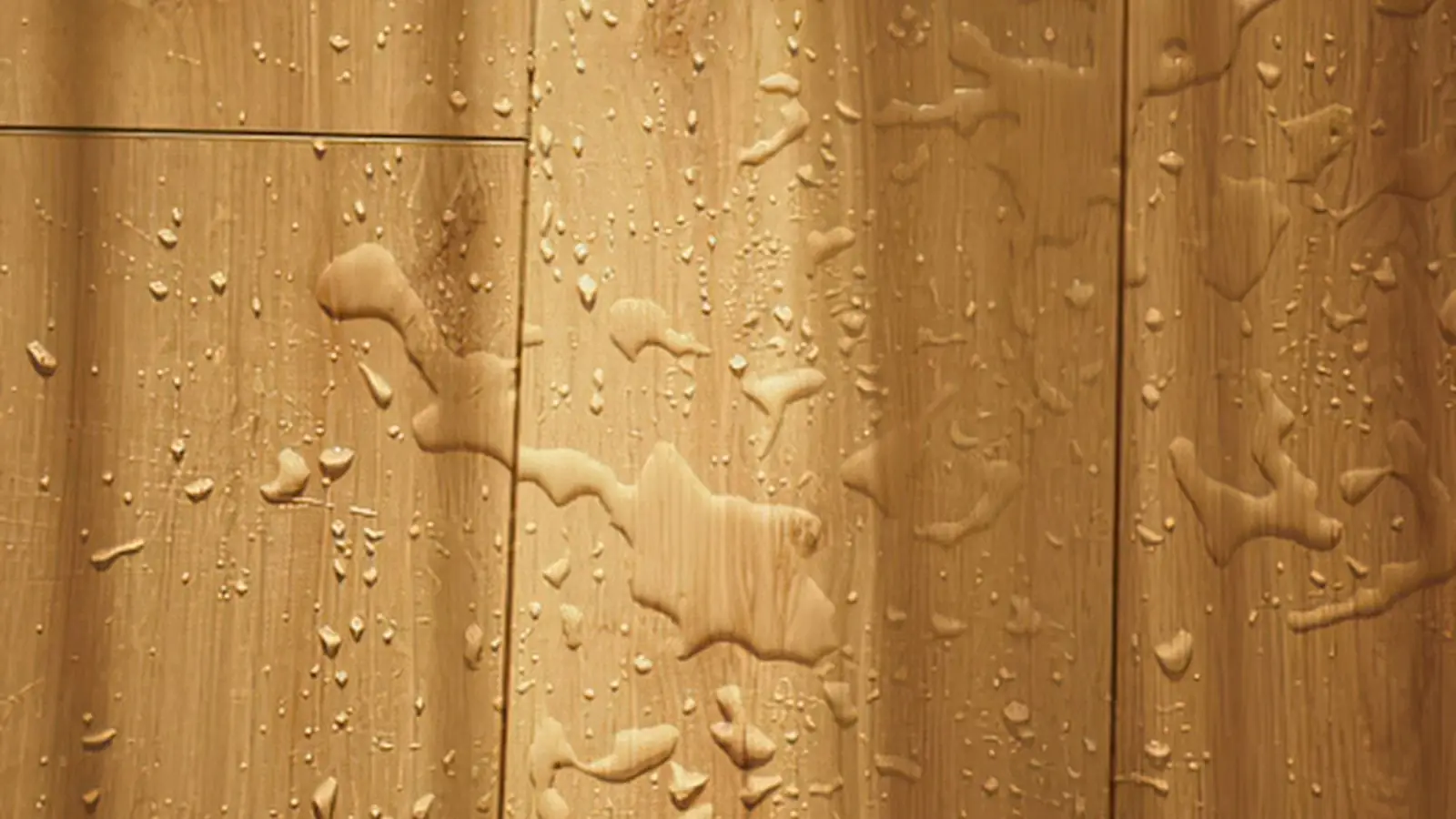
Wood floor water damage shows up as warped boards, raised edges, dark stains or a musty smell after moisture gets under or into the planks. Homes in Southlake, TX can see it after a burst pipe, a failed washer hose or a slow air conditioner leak, and the first few days tell you a lot about what comes next.
This guide is organized by symptom. Find the sign you see on your floor, match it to a likely cause, and learn what to do today. Nothing here replaces a moisture reading, but it will help you act in the right order.
Common causes of wet wood floors
Most floor water damage comes from a short list of sources. Supply line failures under sinks, dishwashers and washing machines release steady water. Upstairs toilet and tub leaks drip into the floor system below. Air conditioner condensate lines that back up can wet a hallway floor slowly and quietly, which is a pattern we hear about from homeowners with cupped hardwood.
Weather matters too, in Southlake and in Keller alike. Freeze and thaw winters can burst pipes, and spring storms can overload gutters and push water toward doors. The February 2021 winter storm tested North Texas plumbing and water systems, and plenty of homeowners learned how fast a split line can soak a floor. Crews also work in Colleyville on the same kinds of losses.
Symptom-first decision table
Start here if you can see something odd on the floor. The table pairs each symptom with the most likely story behind it and the best first move.
| What you see | What it usually means | Best first move |
|---|---|---|
| Board edges higher than the center (cupping) | Moisture came from below, such as a leak or damp subfloor | Find and stop the source, then start drying from underneath |
| Board centers higher than the edges (crowning) | Often a floor that was cupped, then sanded too early | Check moisture readings before any refinishing |
| Boards lifting off the subfloor (buckling) | Large amount of water or long exposure | Stay off the area and call for assessment right away |
| Dark gray or black patches | Water sat on or in the wood for days | Photograph it and have it checked for hidden moisture |
| White or cloudy haze on the finish | Surface moisture, often from a spill or wet mop | Let it air dry and watch for change over a few days |
| Gaps opening between boards | Wood drying out and shrinking after being wet | Wait for full dry-down before judging repairs |
| Musty smell with no visible damage | Hidden moisture in the subfloor or wall cavity | Get readings before anything is covered or sealed |
Cupping in the first 48 hours
Cupping is the most common first sign, and it can appear within a day or two of a wet event. The bottom of each board absorbs more water than the top, so the board curls up at its edges. That shape tells you the moisture is coming from below or from a trapped source such as an under-floor leak.
Cupping from a short clean-water event often relaxes as the boards dry, which is why drying comes before sanding. If you sand cupped boards while they are still wet, they dry flat later and then crown. Our emergency water removal crews focus on pulling standing water first so the floor has a chance to settle.
Buckling and staining in the first week
Buckling is the dramatic one. Boards push up in a ridge or lift completely, and nails or glue let go. It usually follows a lot of water or several days of exposure, and it often means the subfloor is wet too.
Staining takes longer. Dark patches near nail heads or along seams come from water reacting with the wood and finish. Black stains that run deep into the wood do not sand out easily, and the board may be replaced. Early drying can limit how far staining spreads.
What to do in the first days
- Find the source and stop it, starting with the main water valve if a supply line is leaking.
- Turn off power to wet areas only if you can reach the panel dry. If electrical or gas risk is present, leave and call the utility or 911 first.
- Soak up standing water with towels or a wet vacuum and lift rugs and furniture off the boards.
- Keep people and pets out of any water that may be contaminated.
- Photograph the floor, the source and any damaged items before cleaning.
- Keep a fan moving air across the room, but do not cover the floor with plastic.
How a restoration crew confirms the damage
Crews measure before they decide. A moisture meter scans the planks and the subfloor, a thermal imaging camera traces cold wet zones behind the finish, and readings are compared with a dry reference board. Dehumidifiers and air movers go in once the wet area is mapped.
If the boards recover, the next step is refinishing, and if they do not, sections are replaced. We cover that path in more detail in the water damage repair scope, and the published ANSI/IICRC S500 standard lays out the drying principles, so ask any company whether its crews work to it.
When a wood floor problem is not an emergency
Not every floor change is a leak. Seasonal humidity swings can open small gaps and cause mild cupping in homes with no recent water event. If the pattern is uniform across the house and you have no moisture source, an HVAC or humidity issue is more likely.
Still, a floor that keeps cupping, a smell that will not leave, or any soft spot underfoot deserves a moisture reading. Better to learn the floor is dry than to cover a wet one with a new finish.
When to call about a damaged wood floor
Pick up the phone when boards start to cup, buckle or stain, and do it sooner if water is still on the floor. Our dispatch network of licensed and insured restoration professionals serves Southlake and nearby towns, explains scope and price before work starts, and offers same-day response when available. Call (817) 623-9267.
Southlake utility contacts when a floor floods
The city of Southlake lists Southlake Water Utilities and Public Works as the department that maintains the infrastructure delivering water and wastewater service. Customer service is (817) 748-8051, and the city gives (817) 748-8082 for after-hours water or sewer emergencies.
Knowing those numbers before a leak helps in a specific way. If the water is entering your house from the street side of the meter, the utility has to deal with it first, and a floor cannot dry while that water is still coming in. For leaks on your side of the meter, shut your main valve and move to drying.
Frequently asked questions
Hidden sources are common. A slow supply line leak, a condensate drain backing up, or moisture rising from a damp crawl space or slab can wet the underside of boards without puddles on top. A moisture meter can trace it.
Often they do, once the source is fixed and the boards dry slowly. That can take days to weeks, so judge the floor only after readings return to normal.
Frequently, yes, because buckling means fasteners or adhesive have failed. A technician has to check the subfloor and may be able to save some boards, but large buckled areas typically come out.
Southlake Water Utilities customer service is listed at (817) 748-8051, and the city lists (817) 748-8082 for after-hours water or sewer emergencies. For a leak inside your home, shut off your main valve and call a restoration professional. Our water mitigation team handles the drying once the source is stopped.
Sudden and accidental leaks, such as a burst pipe, are often covered. Gradual leaks and flooding usually are not unless you carry a flood policy, so ask your insurer about your own policy.
Questions about your own situation? Call and describe what you are seeing.
☎ Call (817) 623-9267