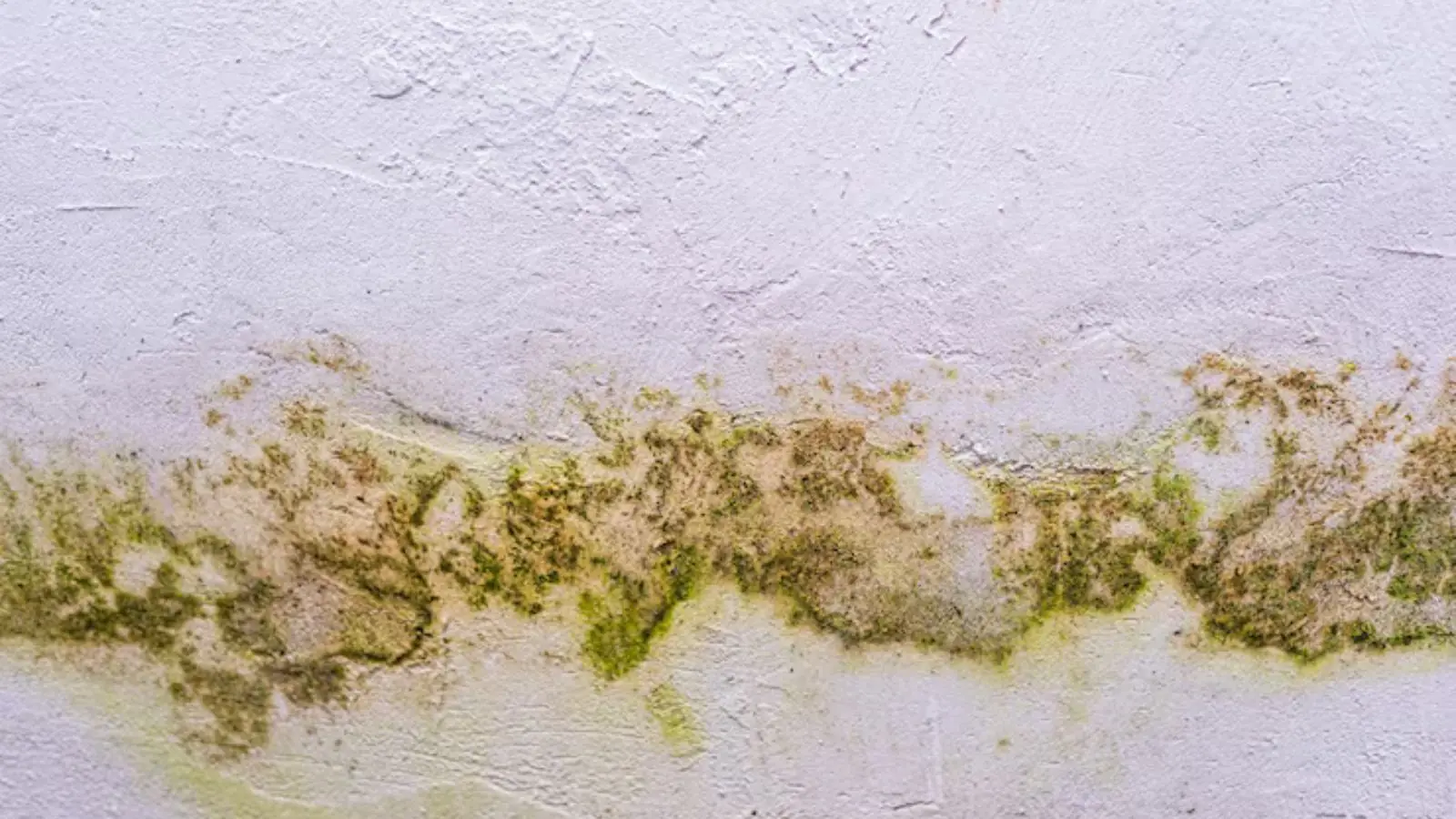
Mildew is a surface growth of mold, usually flat, powdery or downy, and often white, gray or yellowish. In Southlake, TX, it tends to appear where a bathroom, closet or window stays damp.
Mildew and mold are not two unrelated things, and our crews in Grapevine and Colleyville see both words used for the same sort of patch. People use mildew for light growth on a surface and mold for deeper or heavier growth, but both need moisture. This guide covers where mildew appears, what you can clean yourself, and when a water damage repair or removal pro is the better call.
Mildew and mold: how the words differ
In everyday talk, mildew means thin growth sitting on top of a surface, like the film on a shower curtain. Mold is the broader word and often describes growth that has taken hold in or under a material.
The distinction is informal. A single organism could be called either depending on how far along it is, so the label tells you little about what to do. The better question is how wet the material is and how long it has been that way.
What mildew looks and feels like
Mildew is usually flat. It can look like a dusty coating, a faint web or a gray patch that smudges when touched.
Colors vary, and the color alone does not identify it. It often comes with a damp, stale smell. If it wipes off and the surface underneath is solid, it is more likely to be surface growth. If the surface underneath is soft, stained through or warped, the moisture has gone deeper than a wipe can reach, and that changes the plan.
Where mildew shows up around the house
Look anywhere moisture lingers and air barely moves.
A few places give it away more often than others.
Showers and tubs
Grout lines, caulk, curtains and the corners where water pools.
Window sills
Condensation on cold glass drips down and soaks the frame and sill.
Closets
Packed shelves and shut doors trap damp air, especially on exterior walls.
Under sinks
A slow drip at a supply line can keep the cabinet floor wet.
Laundry rooms
Damp towels, wet floors and an unvented dryer add moisture.
Garage and storage areas
Cardboard boxes and cloth items soak up humidity.
Cleaning light mildew safely
For a small patch on a hard surface like tile, glass or sealed fixtures, gentle cleaning is reasonable. Use a detergent and water solution and a soft brush, wear gloves, and ventilate the room.
Never mix cleaning products, especially bleach with ammonia. Dry the surface afterward with a towel, and leave the fan running for a while. Toss porous items like a mildewed bath mat or shower curtain liner if cleaning does not restore them. The point is not just the stain. It is removing the damp that fed it, so the same patch has less reason to return.
- Run the bathroom exhaust fan during and after showers.
- Wipe down wet shower walls and window sills.
- Leave closet doors slightly open and give shelves room.
- Fix drips and replace failed caulk.
- Keep indoor humidity low with air conditioning and a dehumidifier.
Light cleaning compared with calling a pro
The right response depends on the surface and the size. The table gives a rough guide, not a rule.
| What you find | Reasonable response | Bring in a pro when |
|---|---|---|
| Film on tile or a shower curtain | Clean, dry and ventilate | It returns within days |
| Spots on a painted wall near a window | Clean gently and fix the condensation | The wall feels soft or paint bubbles |
| Gray patch on a closet wall | Empty the closet and look for moisture | A leak or damp wall is behind it |
| Growth on drywall or ceiling after a leak | Stop the water first | Material was wet more than a day or two |
| Large area across a wall or ceiling | Do not scrub it | It covers 25 contiguous square feet or more |
The 25 square foot threshold, stated carefully
Texas uses 25 contiguous square feet of visible mold as a key threshold for its licensing rules. That is about a five-by-five patch. Owners may do some work on their own property under exemptions, so rules for your situation can differ.
Ask TDLR or the contractor which rules apply to your job. For larger areas, a licensed assessor and remediator are involved, and our mold remediation page describes how that works.
Moisture is the thing to fix
Cleaning removes what you can see. It does not dry the wall. Moisture meters can show whether framing or drywall is still wet, and thermal imaging cameras help trace hidden leaks.
We are honest about the limits. Restoration dries and repairs, but it is not waterproofing, and growth can return anywhere moisture does. For questions about health, a physician is the right person to ask, not us.
Professional mold remediation follows the published ANSI/IICRC S520 standard, which is worth asking about if a cleanup grows beyond a small surface. Ask any company whether its crews work to S520 before you hire it.
When to call
Call when mildew keeps returning, when a wall feels damp or soft, when you see staining after a leak, or when the affected area is larger than you can handle. Photograph it, note when you first saw it, and write down where the nearest water source is.
To talk with a licensed and insured restoration professional about a damp area, call Southlake Water Damage Pros at (817) 623-9267. Dispatch is available 24/7, serving Southlake and nearby towns.
Southlake homeowners and the state rules on mold
The Texas Department of Licensing and Regulation licenses mold assessors and remediators and sets the 25 contiguous square feet threshold that shapes its rules. Sampling to find out whether mold is present requires a licensed assessor, and the samples go to a licensed lab, so a stain on your wall cannot be named by a neighbor or by color.
The Texas Department of Insurance says mold can begin growing within a day after a leak, and that most policies do not cover gradual leaks or the mold they cause. If you suspect a hidden leak, report it promptly, take photos before cleaning, and ask your insurer what applies.
Frequently asked questions
Mildew is a term for surface growth of mold, usually flat and powdery. Mold is the broader word.
Both need moisture, so the cleanup mindset is the same: remove the growth and dry the area.
On a small, hard surface, yes, with gentle cleaning and good ventilation. If it returns quickly, moisture is still present.
On drywall, ceiling tile or carpet, wiping rarely solves it.
Not always. Steam, condensation and humid air can do it. But a leak is a common cause, especially if the spot is in one place and keeps coming back.
A moisture meter reading tells you more than the look of the spot.
Do not mix products at all. Combining bleach with ammonia or other cleaners can release harmful fumes. Use one product at a time and rinse between.
A simple detergent and water wash does the job on light surface film.
A plumber fixes the pipe, and a restoration crew dries the structure. For a water main or street-side leak, contact Southlake Water Utilities at (817) 748-8051, or Public Works at (817) 748-8082 after hours.
If walls were wet, our water damage cleanup team can help dry them before anything grows.
Questions about your own situation? Call and describe what you are seeing.
☎ Call (817) 623-9267