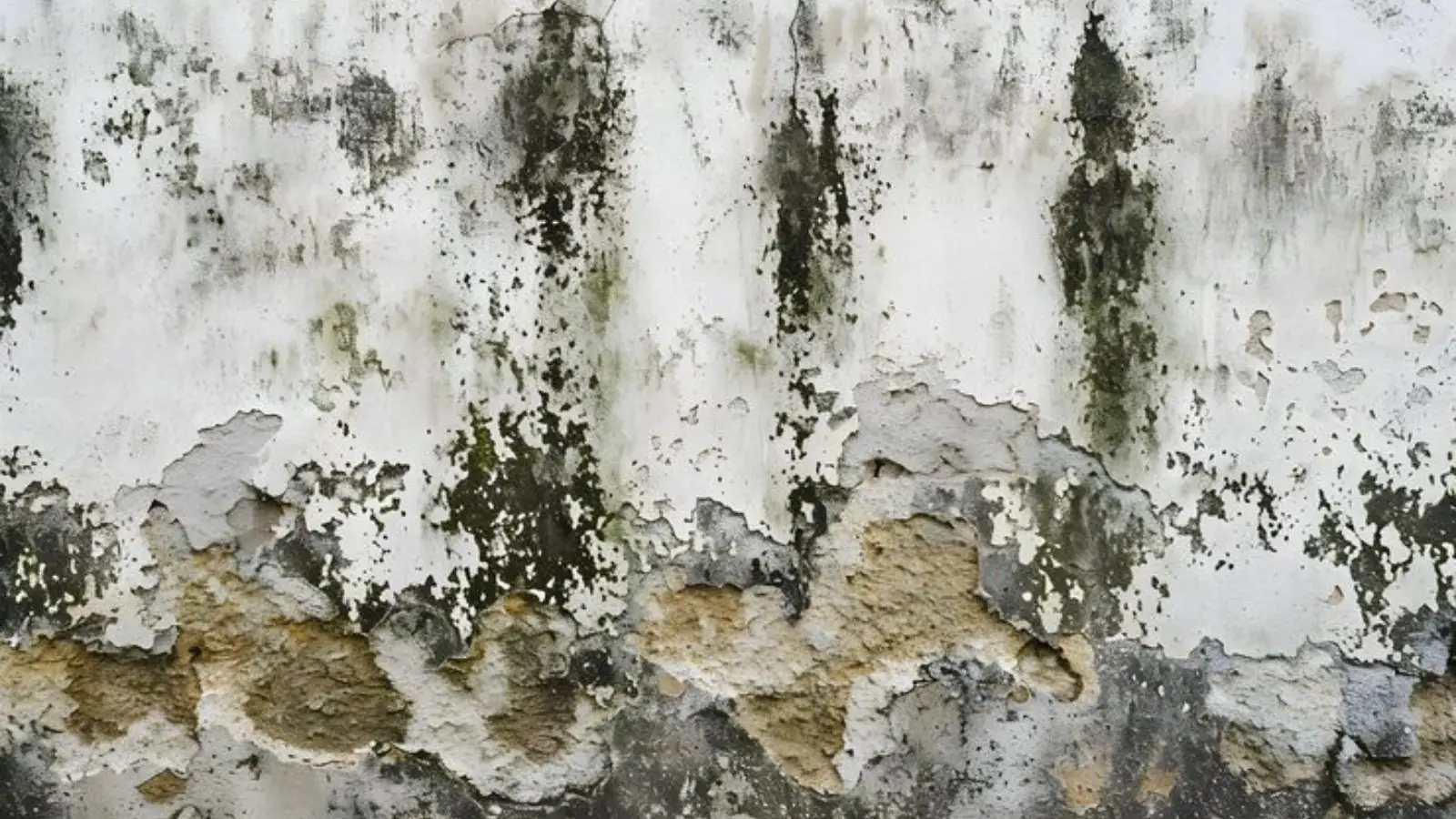
People searching what does black mold look like are usually staring at a dark patch on a ceiling, a grout line or a closet wall. In Southlake, TX, those calls are among the most common we hear after a leak or a damp season.
Here is the honest answer up front. Color does not identify a species. Dark growth can be several things, including dirt, soot, stains or other kinds of mold, and only a licensed mold assessor taking samples can say what is on your wall. This guide helps you describe what you see and choose a sensible next step.
What people usually mean by black mold
The phrase is used loosely for any dark, greenish-black or charcoal growth. It is a common label, not a diagnosis.
Looking at a spot cannot tell you its species. That limit is why a photo sent to a friend, or even to a restoration company, is a starting point only.
Visual traits to notice and describe
When you call anyone, being able to describe the spot helps. Note the details below and take a clear photo with a coin or ruler beside it for scale.
- Color, which can range from black to dark green, gray, brown or even white and orange in other growth.
- Texture, such as fuzzy, powdery, slimy, speckled or flat like a stain.
- Pattern, whether it is clustered in dots, spreading outward in a ring or following a line like a seam.
- Location, for example near a window, under a sink, on a ceiling below a bathroom or behind furniture.
- Feel of the surface, since soft, bubbling or crumbling drywall suggests ongoing moisture.
- Whether it comes back after you wipe it.
Spots that look like mold but may be something else
Plenty of dark marks are not growth at all. Soot from candles collects on walls and ceilings in lines. Dirt rings form where a cool surface meets dust.
Old water stains are often tan or brown and have a clear edge. Grease, nicotine residue and dark paint can also fool the eye. If a mark wipes away cleanly and does not return, it is less likely to be growth, though you still cannot be sure from looks alone.
A symptom-first decision table
Start with what you see, not with what you fear. The table pairs common sights with possible explanations and a reasonable next step.
| What you see | What it might be | Sensible next step |
|---|---|---|
| Dark speckles on a bathroom ceiling | Surface growth from steam, or dirt | Run the exhaust fan, wipe a small area, and see if it returns |
| Dark patch with a tan ring after a leak | Water stain with possible growth | Find the leak, photograph it, and have the area checked for moisture |
| Black fuzzy spots on drywall that feels soft | Growth on materials that stayed wet | Stop the water, then consider a licensed assessor |
| Dark lines on walls above baseboards or outlets | Soot or dust deposits | Clean a test spot and check airflow patterns |
| Dark stain inside a closet corner | Humidity or a hidden leak | Move items away from the wall and inspect for moisture |
| Dark area larger than a few feet across | Possibly significant growth | Call a licensed assessor, because Texas rules apply above a threshold |
How a licensed assessor tells you what it is
In Texas, collecting air or surface samples to determine whether mold is present requires a licensed mold assessor. Samples go to a licensed laboratory, and the assessor explains the results and, if needed, writes a remediation protocol.
A restoration company that tells you by sight that it is a particular species is guessing. If a mold remediation contractor offers testing, ask whether the person holds the proper license and whether the same company will also do the removal.
What to do and not do before anyone arrives
Stay practical and calm. A spot does not become urgent in an hour, but moisture should be dealt with soon.
- Fix or isolate the water source, such as a dripping supply line or a clogged condensate line.
- Photograph the area before touching or cleaning it.
- Avoid scrubbing or sanding the spot, since that can spread material around the room.
- Keep the room dry with air conditioning, a fan and a dehumidifier.
- Do not paint over the spot, because paint hides it without drying the wall.
- Keep a note of when you first saw it for your insurer.
How the size of the area changes the rules
Texas treats 25 contiguous square feet of visible mold as a key threshold. Smaller jobs may fall under different rules, and owners can do some work on their own property under exemptions.
Edge cases are tricky, so ask TDLR or the contractor which rules apply to your job. If the cause is a roof leak or ceiling stain, our water damage repair crew can handle the rebuild once the area is cleared. The same sequence applies for callers in Keller and Colleyville.
ANSI/IICRC S520 is the published standard for professional mold remediation, and it separates looking at mold from assessing it. Ask any company whether its crews work to S520, and remember that only a licensed assessor taking samples can say what is growing.
When to call
Call when a dark patch is spreading, when drywall is soft, when a leak keeps feeding it, or when you want a licensed assessor to sort out what it is. For any concern about how a space affects your health, talk to your physician. We do not diagnose and we do not give medical advice.
To describe what you see and learn the next step, call Southlake Water Damage Pros at (817) 623-9267. We are a dispatch network of licensed and insured restoration professionals, available 24/7.
Local steps in Southlake when you find a dark spot
The Texas Department of Licensing and Regulation licenses mold assessors and remediators, so a Southlake homeowner can look up a person or company on the state's license search before hiring. The assessor who writes a protocol and the remediator who carries it out should be able to show their licenses, and a consultant who did not write the protocol cannot declare clearance.
If you plan to claim a loss, the Texas Department of Insurance advises taking photos or video before repairs and keeping damaged items until the adjuster has seen them. It also notes that most policies do not cover mold from gradual leaks. Ask your insurer before you start any cleanup.
Frequently asked questions
No. Color tells you very little. Different organisms can look alike, and one species can look different depending on the surface and moisture.
Only sampling by a licensed assessor and lab analysis can identify what is present.
Kits can show that spores exist, but spores are in nearly every home, so the result rarely answers your question. In Texas, sampling to determine whether mold is present is done by a licensed assessor.
A kit also does not tell you where the moisture came from.
We cannot speak to how a space affects anyone. If you have concerns about your health or anyone else's, please ask a physician.
In practical terms, avoid disturbing the spot, wear gloves if you must handle a small area, and fix the water source.
Paint covers the look and leaves the moisture in place, so the stain often shows through later. The wall needs to be dry and the cause corrected first.
If the spot is on a ceiling after a roof leak, the repair involves finding that leak too.
It happens. A buyer's lender may want mold addressed before funding, and that usually calls for a licensed remediator and an independent clearance from a licensed consultant.
Ask your agent and lender what documents they need, so the paperwork matches what the work produces.
Questions about your own situation? Call and describe what you are seeing.
☎ Call (817) 623-9267