Water damage restoration steps are the stages a crew follows to take a wet building back to a dry, clean, repaired condition. Southlake, TX homeowners who understand these stages can ask better questions and spot a rushed job sooner.
No two losses are identical, but the sequence is consistent: assess, extract, dry, clean, monitor, and rebuild. Below is each stage in the order it happens, with a table showing what you will see and what the crew is checking.
Step one: the call and the first look
The first call covers the basics. Where is the water, what caused it, and has it been shut off? If the answer is no, stop the source and, if it is safe, shut off the main water valve before anything else.
On arrival, the crew inspects before touching anything. A moisture meter and a thermal imaging camera show where water traveled, often well beyond the visible stain. They also identify the water category, which sets the plan for what can be dried and what must be removed.
Step two: stopping the loss and extracting water
Standing water comes out first, using extraction units that pull water from floors and carpet. Fast extraction matters because less water left behind means less drying time. If the job is urgent, our emergency water removal service covers this stage.
Materials that cannot be saved are removed early, such as soaked carpet pad and wet insulation. Contents are moved or protected. Photographs are taken throughout, which also helps if an insurance claim is involved.
Step three: structural drying
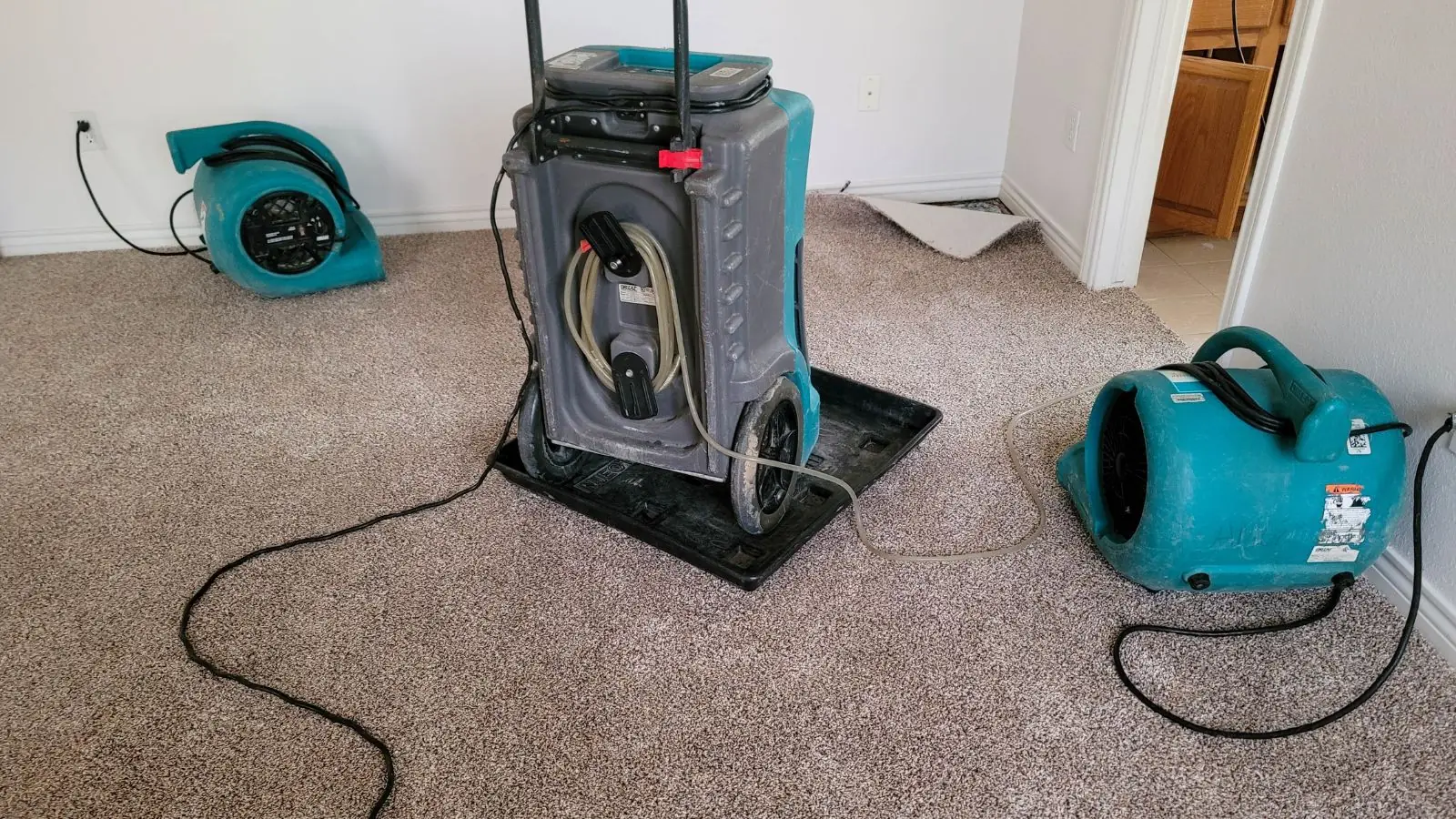
Drying is the longest stage. Air movers push dry air across wet surfaces, while LGR dehumidifiers remove moisture from the air so it does not just move around the house. Small holes may be drilled or baseboards pulled so air reaches wall cavities.
Crews return to take moisture readings, adjust equipment, and decide when it can come out. The target is a normal reading for each material, not a feeling that the room seems dry. The details of this stage are covered under water mitigation.
Step four: cleaning and sanitizing
Once the structure is drying, the crew cleans surfaces, sanitizes where needed, and treats odor. Hard surfaces and salvageable contents are wiped down, and anything contaminated is removed. HEPA air scrubbers and containment barriers keep dust out of clean rooms.
The cleaning scope depends on the water category. Clean-source losses need less than sewage or floodwater, where porous materials are usually discarded.
Contents get their own attention. Hard items such as glass, metal, and sealed wood can often be cleaned in place, while soft goods that soaked in contaminated water are typically discarded. Photograph anything you plan to throw out and keep it until your insurer says otherwise.
A quick view of the full sequence
The table below summarizes the stages, what you will notice, and what the crew confirms before moving on. Use it as a reference when you talk with a contractor.
| Stage | What you will see | What the crew confirms |
|---|---|---|
| Inspection | Meters, a thermal camera, photos | Source stopped, water category, extent of damage |
| Extraction | Water vacuumed, wet materials removed | Standing water gone |
| Drying | Air movers and dehumidifiers running | Moisture readings falling day by day |
| Cleaning | Surfaces wiped, air scrubbers placed | Contaminated items removed, odors addressed |
| Monitoring | Return visits with meters | Readings at normal levels for each material |
| Rebuild | New drywall, flooring, paint | Work matches the written scope |
Step five: monitoring and signing off on dryness
A good crew returns repeatedly. Each visit records new moisture readings so you can see drying progress in numbers instead of guessing. When materials reach normal levels, the equipment is removed.
Be wary of a crew that pulls its equipment after one day without a reading. Drying that stops early leaves moisture inside wall cavities and subfloors where it cannot be seen. Mold can begin growing within a day after a leak, which is why those return visits matter so much.
Ask whether the crew works to ANSI/IICRC S500, the published standard for water damage restoration. If they do, you will see documentation like readings, equipment logs, and photographs that support the work.
Step six: rebuild and repair
Repair begins only after drying is confirmed. Drywall, insulation, flooring, trim, and paint are put back, and the order follows the rooms and trades. The work is described in a scope that should be explained, including price, before it starts.
Before the first sheet of drywall goes up, ask for the final readings in writing. Also ask who schedules painters and flooring installers, and who will handle any inspection the city may require.
Rebuild is a separate stage from drying and is covered by water damage repair. Restoration returns a house to its pre-loss condition. It is not waterproofing and does not prevent a new leak.
Insurance and the steps: where documentation matters
Most policies cover sudden and accidental water damage and not gradual leaks, according to the Texas Department of Insurance. Take photos before repairs, keep damaged items until the adjuster has seen them, make temporary repairs to limit damage, and hold permanent repairs until the insurer inspects.
Mold can begin growing within a day after a leak. If it appears, use a state-licensed mold professional. The restoration steps above, with their photos and logs, give your insurer a clear record, but only the insurer decides coverage.
When to call us to start the steps
Call (817) 623-9267 any hour if water is present and you want the first step started. We are licensed and insured restoration professionals serving Southlake and nearby towns, with same-day response when available, and we explain scope and price before work starts.
Southlake offices to know when a restoration job begins
Southlake Water Utilities and Public Works maintain the infrastructure that delivers water and wastewater service. Customer service is (817) 748-8051, and after-hours water or sewer emergencies go to Public Works at (817) 748-8082. If the problem is on the utility side, call them while a crew handles the inside.
Rebuild work may involve the city's Building Inspections office at 1400 Main Street, (817) 748-8236. The city site does not say whether water damage repair needs a permit, so ask the Southlake building inspections office whether your repair needs a permit before walls are closed up.
Frequently asked questions
Extraction happens quickly, and drying commonly takes several days depending on the materials and the amount of water. Rebuild comes after that and varies with scope. Moisture readings, not the calendar, decide when drying is finished.
Skipping drying risks trapped moisture, odors, and mold. Rebuilding over wet materials often means doing the work twice. Drying and moisture checks should come before closing up walls.
No, we do not rent equipment. Professional air movers and LGR dehumidifiers are placed, monitored, and removed by the crew running the job, which keeps the readings and decisions in one place.
No. Restoration cleans and dries after a loss and rebuilds what was damaged. Waterproofing is a separate construction topic. Crews serving homes in Keller and Colleyville explain the same limit.
Stop the source if you can, then call a restoration company and your insurer. For a city water or sewer problem outside the home, Southlake Public Works takes after-hours calls at (817) 748-8082.
Questions about your own situation? Call and describe what you are seeing.
☎ Call (817) 623-9267