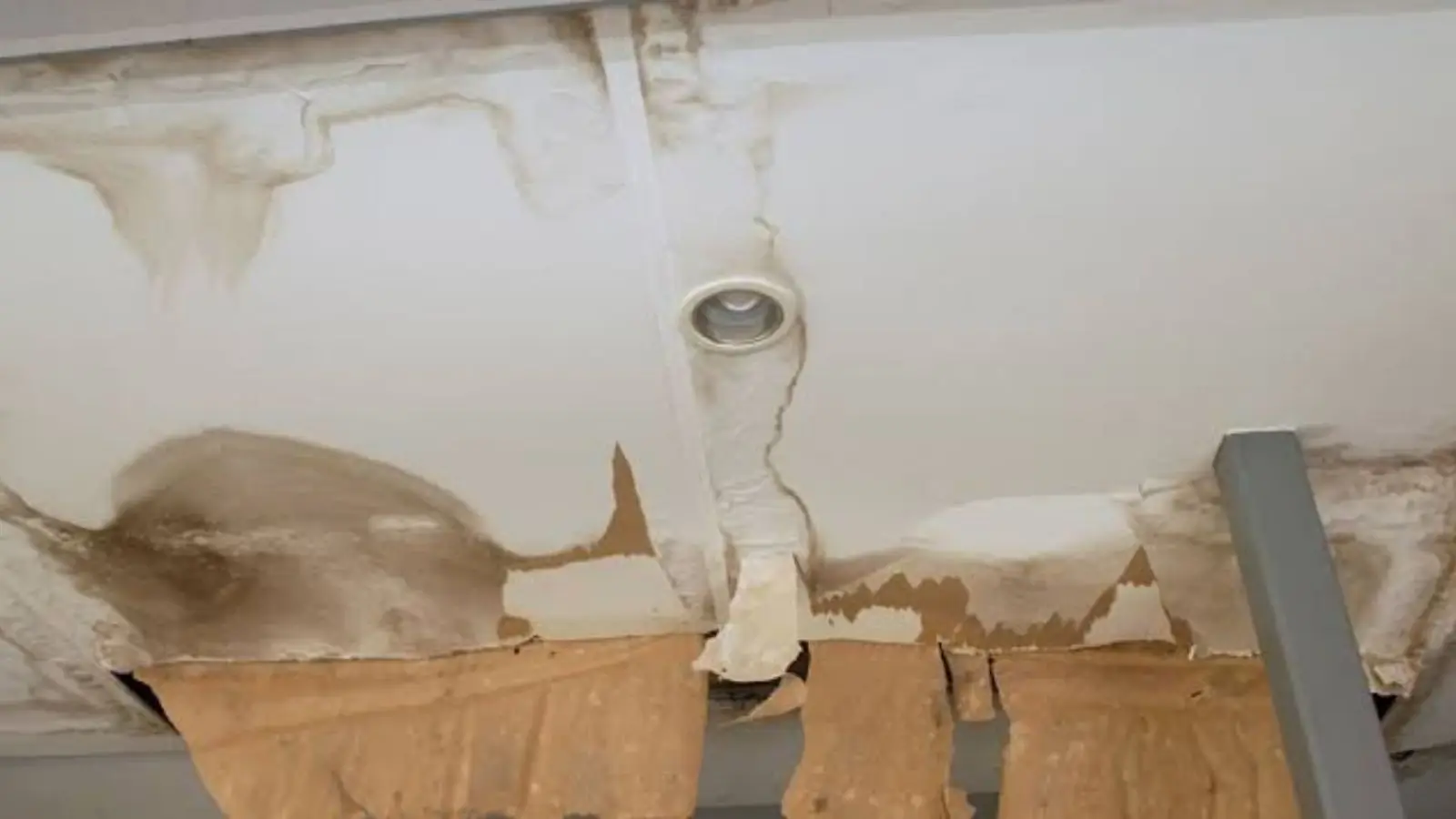
Water damage ceiling repair cost depends on what got wet, how dirty the water was, how much ceiling is affected and what has to be opened up to dry it. A homeowner in Southlake, TX who asks for a flat number over the phone is asking a fair question, but the honest answer is a scope, and the scope comes from looking at the ceiling.
This post lays out the factors that move the price and how a restoration company sets scope. It does not quote any dollar amounts, because the same stain can be a small patch or a full rebuild depending on facts you cannot see from below.
Why one stain can mean two very different jobs
A brown ring on a ceiling is only the visible edge of a wet area. Water moves along joists, pools above the drywall and soaks insulation, so the hidden area is nearly always larger than the stain. A thermal imaging camera and a moisture meter map that hidden area before anyone cuts anything.
A common Southlake-area story is an upstairs toilet or tub leak that stains the ceiling below. The stain may be the size of a dinner plate, while the wet drywall and insulation behind it span several feet. That gap between what you see and what is wet is why quotes made by photo alone often change.
The cost factors that set the scope
Six factors do most of the work in setting the cost of a ceiling repair. Each one affects labor, materials, equipment or the number of visits required. This table shows how they work.
| Cost factor | How it changes the job |
|---|---|
| Water category | Clean supply water allows more drywall to be dried. Category 2 and 3 water, such as washing machine or sewage water, means removal and disinfecting. |
| Area affected | More wet drywall means more removal, more disposal and more new board to hang. |
| Ceiling type | Flat drywall, textured, popcorn and tile ceilings each need different tools and finishing steps. |
| Insulation | Wet insulation holds water against the board and usually has to be removed and replaced. |
| Access | Attic height, tight crawl spaces and two-story rooms change equipment setup and time on site. |
| Paint matching | Blending texture and paint across a room, or to a natural break, adds finishing steps. |
| Drying | Equipment type, number of days and the monitoring visits needed to reach dry readings. |
Not every factor applies to every job. A small clean-water leak caught early might involve only a couple of these, while a long-running roof leak into an attic can involve all of them.
Water category: the factor homeowners overlook
The industry standard ANSI/IICRC S500 groups water into three categories. Category 1 is clean supply water, category 2 is gray water with some contamination, and category 3 is grossly contaminated water such as sewage or long-standing water. Ask any company whether its crews work to S500.
Why does it matter for cost? Porous ceiling materials that soaked in category 2 or 3 water are generally removed, not dried. Clean water leaks caught in the first day or two give drywall a better chance of being saved, which keeps the job smaller.
How a restoration company builds the scope
The scope is built from findings, in this order: identify and stop the source, measure the wet area, classify the water, decide what is dried and what is removed, and list the rebuild. Moisture mapping drives each step. A company that cannot explain its scope is guessing.
We explain scope and price before work starts, so you see what is being dried, what is coming out and what the rebuild includes. Drying work falls under water mitigation, and the rebuild of drywall, texture and paint is covered under water damage repair. Splitting the two on paper helps you compare quotes honestly.
If the ceiling is sagging, do this first
A sagging or bulging ceiling is holding water, and it can let go without warning. Water weighs a lot, and wet drywall and insulation add to the load. Treat the room under the sag as unsafe.
- Keep people and pets out from under the bulge and close the door if you can.
- Shut off the main water valve if the source could be a plumbing line.
- Turn off power to that area only if you can reach the panel while dry. If water is near fixtures or outlets, or you smell gas, leave and call the utility or 911 before you call us.
- Do not poke, cut or press the ceiling, because the weight can come down on you.
- Move furniture and valuables out of the way only from the edges of the room, away from the sag.
- Photograph the ceiling from a safe distance, plus the source if you can find it.
A trained crew can relieve trapped water in a controlled way, from a safe position, and with protection for the floor. That is not a do-it-yourself task.
Insurance and your ceiling repair cost
The Texas Department of Insurance explains that most homeowner and renters policies cover sudden and accidental water damage, such as a burst pipe or a broken washer hose, while most do not cover gradual leaks or seepage. Flood damage needs a separate flood policy. Check your policy and ask your insurer.
Take photos or video before repairs, keep damaged materials until the adjuster has seen them, and make temporary repairs to limit further damage. Hold permanent repairs until the insurer inspects, and keep your receipts. Nothing here promises that any claim will be approved.
When to call about a water stained or sagging ceiling
A stain that keeps growing, a bulge overhead or drips from a light fixture or vent are all reasons to call right away. Early action keeps the scope smaller, and the same goes for ceilings we see in Grapevine and Roanoke. Our dispatch network of licensed and insured restoration professionals serves Southlake and nearby towns, explains scope and price before work starts, and offers same-day response when available. Want your real number? Call (817) 623-9267.
Where Southlake homeowners start with permit questions
The city of Southlake handles permits, plan review and inspections through its Building Inspections office at 1400 Main Street, Southlake, TX 76092, with a phone line at (817) 748-8236. The city website does not say whether water damage repair needs a permit, so the right question is whether your specific repair does.
That matters most on larger jobs, such as removing and replacing a big section of ceiling along with framing or electrical work. Having the scope written down before you call the office makes the conversation short and specific.
Frequently asked questions
A phone call can identify what questions matter, but a reliable number comes from moisture readings and a look at the ceiling, attic and source. Be wary of any quote that skips the inspection.
Not always. The stain shows where water came through, and the wet area above it is usually larger. Readings show the real boundary.
Usually not. Wet sections are cut out along framing lines and replaced, then taped, textured and painted. Painting to a natural break, such as a corner or a beam, helps the repair blend.
Ask the Southlake building inspections office at 1400 Main Street. The city site does not say whether water damage repair needs a permit, so a short call gets a direct answer for your job. If a roof leak caused the damage, our emergency water removal crews can limit the water first.
Sudden and accidental causes are often covered, and gradual leaks often are not. Ask your insurer what your policy says, and do not assume approval.
Questions about your own situation? Call and describe what you are seeing.
☎ Call (817) 623-9267