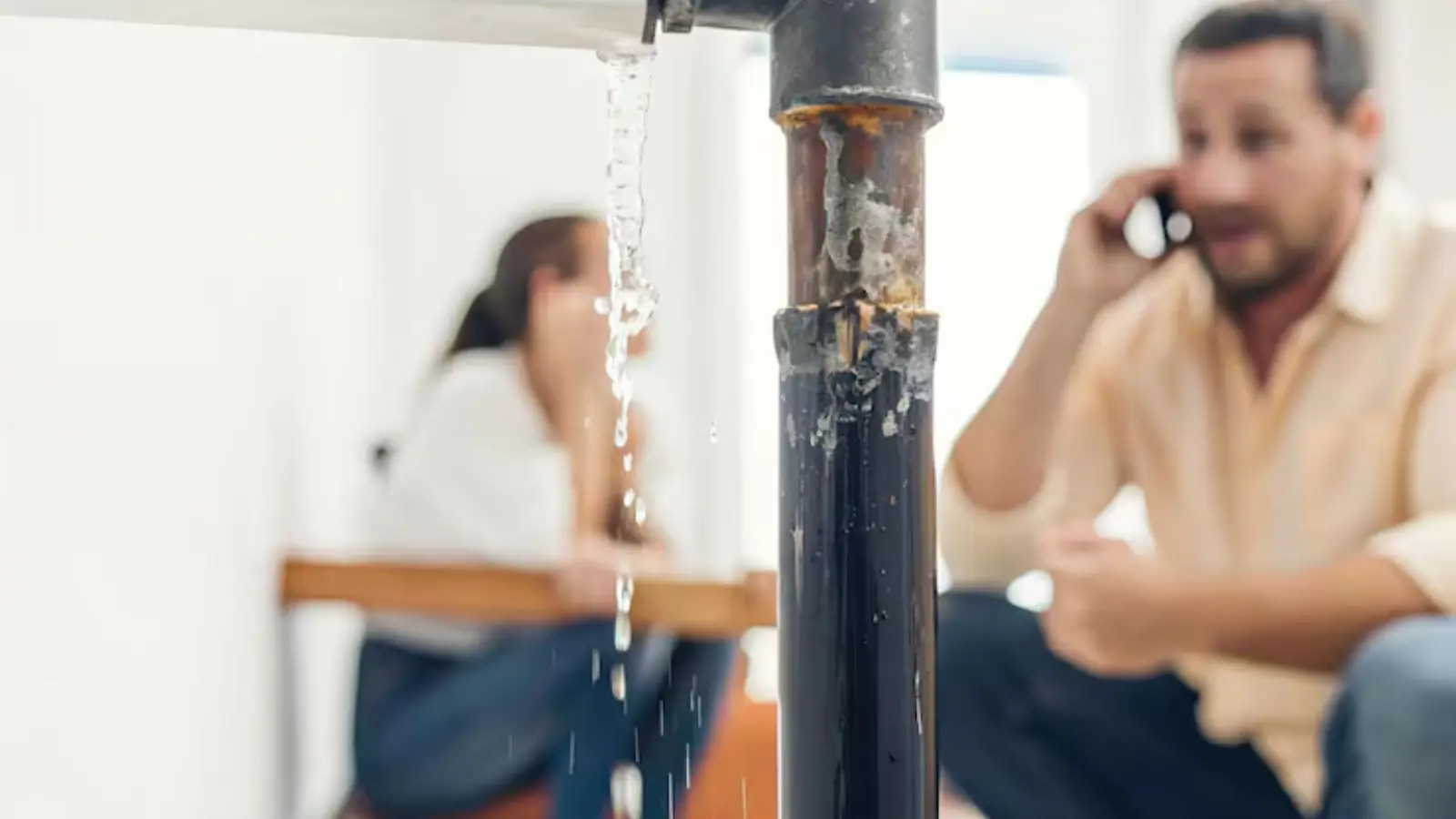
Renters insurance water damage claims start with one confusing question: whose problem is the wet floor, yours or the landlord's? In Southlake, TX the honest answer is that it depends on what got wet, what caused it, and what your lease and policy say.
Renters insurance is a policy that protects a tenant's belongings and some living costs, while the building itself is normally the owner's responsibility. This guide walks through how those two sides split up, what to photograph before anything is moved, and why the first phone call usually goes to your landlord.
Tenant responsibilities and landlord responsibilities
Think of a rental as two separate piles of property. The walls, floors, ceilings, plumbing, and appliances that came with the unit belong to the owner. Your couch, clothes, laptop, bed, and rugs belong to you.
That split drives almost every decision after a leak. The landlord's property insurance, if there is a policy, is meant for the building. Your renters policy is meant for your things, and often for the cost of living somewhere else if the unit cannot be used.
Your lease is the document that settles the gray areas, such as who calls a plumber, who hires a drying company, and who must be told first. Read the water, repair, and notice clauses tonight if you can reach the lease. If you cannot find it, ask the property manager for a copy in writing.
Contents versus structure: what each policy is built for
Most Texas homeowner and renters policies cover sudden and accidental water damage, according to the Texas Department of Insurance. A burst supply line, an overflowing toilet, or a failed washer hose are the usual examples. Gradual leaks and slow seepage are generally not covered, and neither is the mold they cause.
The table below shows the usual dividing line. Treat it as a starting point and ask your insurer how your own policy reads, because wording differs from one policy to the next.
| What got wet | Usually the tenant's side | Usually the landlord's side |
|---|---|---|
| Sofa, mattress, clothing, electronics | Yes, a renters policy is built for these | No |
| Carpet, flooring, drywall that came with the unit | Rarely, unless the lease says otherwise | Yes, building repair |
| Supply line, drain, water heater, built-in appliances | Only if the tenant caused the damage | Yes, repair and replacement |
| Hotel or temporary housing while the unit is unusable | Possibly, if the policy includes living expenses | Depends on the lease |
| Mold that grew on a covered, damaged item | Possibly, covered with the item | Depends on the cause |
Where the tenant caused the leak, such as an overflowing tub, the landlord's insurer may look to the tenant's liability coverage. Ask your insurer whether your policy includes it before you assume anything.
What to document before anything is moved
Insurers decide claims on evidence, and the evidence disappears fast when wet items go to the curb. TDI advises policyholders to take photos or video before repairs begin and to keep damaged items until the adjuster has seen them.
Start with wide shots of each wet room, then move closer to the water line on walls, the stain on a ceiling, and any item that is ruined. Narrate the video out loud with the date and what you see. Photograph serial numbers on electronics too.
- Photograph the source if you can see it, such as a split hose or a dripping fixture.
- Write down the time you noticed the water and the time you shut it off.
- Make a list of damaged belongings with brand, age, and a rough replacement cost.
- Keep receipts for towels, fans, hotel nights, and anything else you buy because of the leak.
- Save every text and email with the landlord or property manager.
Why you should call the landlord first
In most leases the tenant must report a leak promptly, and the landlord controls access to the shutoff valves, the water heater closet, and the walls where pipes run. Waiting a day to tell them can hurt a later claim and let water spread into the unit next door.
So the order is simple. Stop the water if you safely can, then call or text the landlord, then call your insurer. Ask the landlord who will arrange emergency drying, because a restoration company working in a rental needs the owner's permission before opening walls or lifting floors.
If you cannot reach anyone and water keeps spreading, you can still call a restoration team to begin emergency water removal and extract standing water. Tell the owner what you did as soon as you reach them.
What drying looks like in a rented unit
A restoration crew starts with moisture meters and a thermal imaging camera to find where water traveled, since it often runs behind baseboards and under flooring that looks dry. Air movers and LGR dehumidifiers then run for days, and the crew rechecks readings until the materials return to a normal level.
That work falls under water mitigation, and the structural part of it is normally arranged by the owner or manager. Your belongings need separate attention. Wet clothing and soft goods can be pulled out early, while electronics and papers should be set aside for the insurer to see.
We do not rent equipment to tenants, and renting a fan from a hardware store rarely dries wall cavities. Drying decisions inside the walls are best left to the owner's chosen company.
Common tenant mistakes that weaken a claim
The most frequent mistake is throwing everything away at once. The second is ignoring a small drip for weeks, because slow leaks are exactly what many policies exclude. The third is signing a repair agreement or paying a contractor before knowing who is responsible.
A fourth mistake is skipping the mold check. TDI notes that mold can begin growing within a day after a leak, so a damp closet that smells musty deserves attention quickly. If it spreads, see our mold remediation service for how licensed professionals handle it.
When to call us about a rental leak
Call (817) 623-9267 any hour if water is still spreading, a ceiling is sagging, or the landlord needs a crew to begin drying. We are a dispatch network of licensed and insured restoration professionals, with same-day response when available, and we explain the scope and price before work starts.
If you smell gas or see water near electrical panels or outlets, leave the unit and call the utility or 911 first. Then call us.
What Southlake renters should know about city water and permits
Southlake Water Utilities and Public Works maintain the infrastructure that delivers water and wastewater service to the city. For a main-line problem outside your unit, customer service is (817) 748-8051, and for after-hours water or sewer emergencies Public Works can be reached at (817) 748-8082.
Whether a repair needs a permit is a question for the owner. The city's website does not say whether water damage repair requires one, so the right step is to ask the Southlake building inspections office at (817) 748-8236, located at 1400 Main Street. A renter usually leaves that call to the landlord, but it helps to know the number exists.
Frequently asked questions
Most renters policies cover sudden and accidental water damage to your belongings, and a burst pipe is a typical example. The pipe and the wall around it are usually the landlord's responsibility. Ask your insurer how your policy treats the cause of the leak, since claim decisions are theirs alone.
Your own renters policy is usually the first place to look for damaged belongings, even when the cause is next door. Your insurer may later pursue the responsible party. Document everything and tell your landlord so the source is found and fixed. Tenants in nearby Grapevine and Colleyville follow the same basic order of calls.
Stop the source, take photos, and make temporary repairs to limit more damage, which TDI recommends. Keep damaged items until the adjuster has seen them, and hold permanent repairs until the insurer inspects. Pulling up soaked carpet pad may be wise, but photograph it first.
No. Renters and home policies do not cover floods, so flood damage needs a separate flood policy. Rising water from outside is treated differently than a pipe failure inside the unit. If you rent in a low-lying spot, ask your insurer about flood coverage and read about flood damage restoration for what recovery involves.
Call your landlord or property manager first, since they control the building and its shutoff valves. If the water is a main-line issue outside your unit, Southlake Public Works handles after-hours water and sewer emergencies. Then report the loss to your insurer and begin documenting.
Questions about your own situation? Call and describe what you are seeing.
☎ Call (817) 623-9267