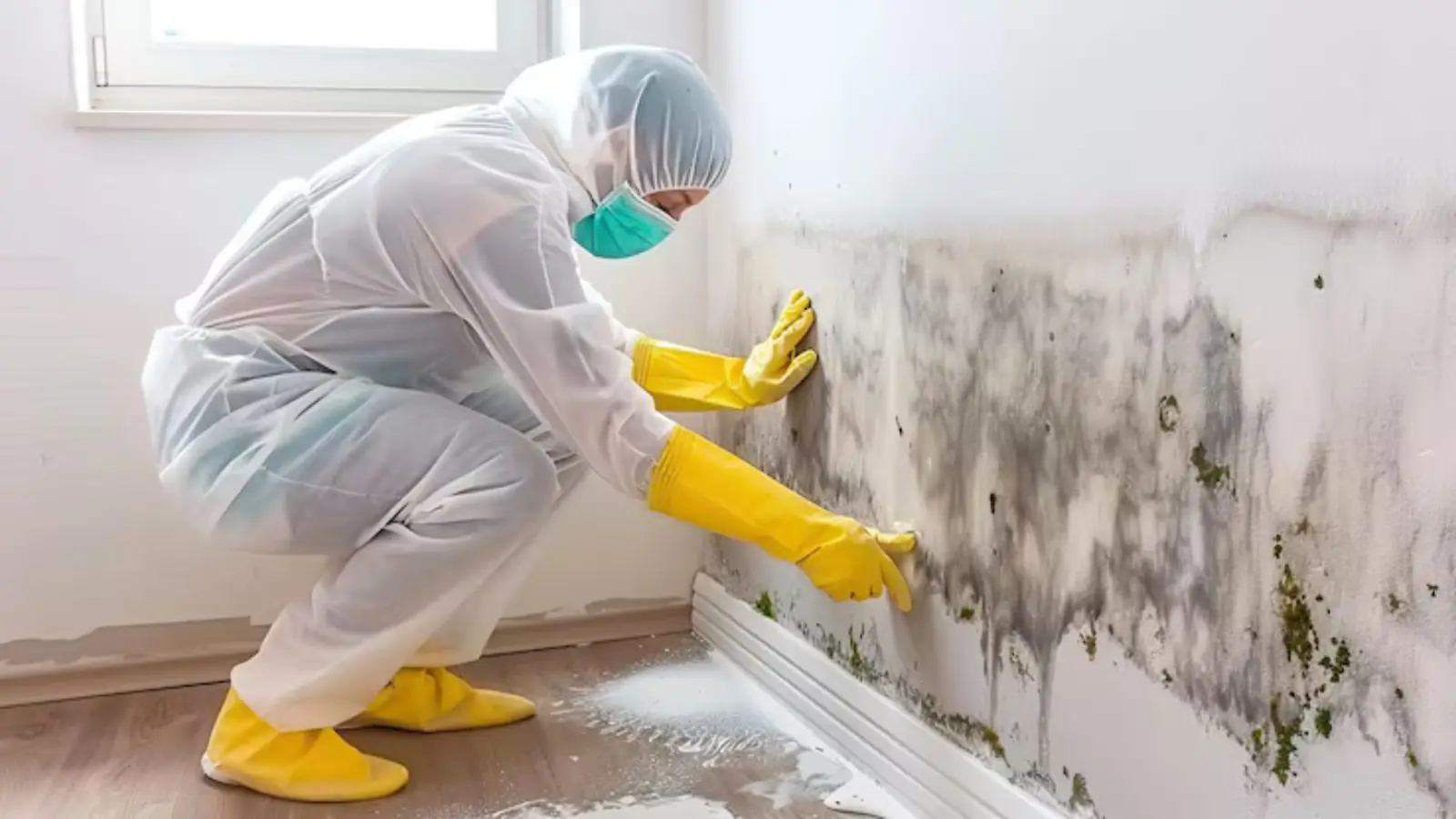
A mold removal service is a company licensed to remove mold-damaged material and clean affected areas under a written plan. In Southlake, TX, hiring the wrong one can mean paying twice, so a few pointed questions up front are worth the time.
Texas splits the work between licensed assessors who write the plan and licensed remediators who carry it out. This guide shows what to ask, what a written scope should contain, and which red flags mean you should keep looking. Our own mold remediation page explains how that process runs from our side.
Understand the two licenses before you call anyone
The Texas Department of Licensing and Regulation licenses mold assessors (technician, consultant and company) and mold remediators (contractor and company). Assessors sample and write protocols. Remediators do the removal.
Ask each company which license it holds and look it up on the state's license search. Keep the license record with your paperwork, since an insurer or lender may ask for it later. A company that says it does everything should be able to explain how it keeps assessment and removal properly separated on your job.
Questions to ask on the first call
Write the answers down. A reputable company will not mind.
- Are you a TDLR-licensed mold remediation contractor, and can I verify the license?
- Will a licensed consultant write the protocol, and is that someone independent from you?
- Who does the clearance testing after the work?
- Do your crews work to ANSI/IICRC S520, the published standard for mold remediation?
- How will you contain the work area, and how will you filter the air?
- What is the moisture source, and who is fixing it?
What a written scope should list
A real scope reads like a plan, not a one-line quote. It names rooms, materials and methods so you can compare bids honestly.
Expect it to say which materials come out and which are cleaned, how containment is set up, what equipment runs, and how waste leaves the home. It should also say what happens to drying afterward and what the clearance step requires. Scope and price should be explained before work starts.
- Areas and approximate sizes involved.
- Containment barriers and negative air with HEPA air scrubbers.
- Removal of affected porous materials, and cleaning of what stays.
- Moisture readings before and after, taken with a moisture meter.
- Independent clearance requirements and who arranges them.
- Rebuild, which is often a separate scope.
Why independent clearance matters
Clearance is the check that the work achieved its goal. In Texas, a consultant who did not write the protocol cannot declare clearance, which keeps the same party from both setting the target and grading itself.
Insurers and lenders often ask for it. A certificate of removal and proof the cause was fixed are what the insurer will want on a mold claim, so ask upfront what paperwork you will receive.
Comparing what you might hear from different providers
Not every answer is equal. The table below groups common responses by what they usually mean.
| What you hear | What it suggests | Your move |
|---|---|---|
| We are licensed and will give you the number to verify | A transparent starting point | Look it up with the state |
| A consultant will write a protocol and clear the job independently | The process matches Texas practice | Ask for names and licenses |
| We will just spray and it is done | No containment, no moisture fix, no protocol | Keep looking |
| No need for containment, we will be careful | Dust and spores can spread to clean rooms | Ask how they control the air |
| Our price is the same without seeing it | A quote without a scope | Ask for a written scope first |
| We do not fix the water problem | Growth is likely to return if moisture stays | Get the moisture fixed in parallel |
Red flags worth walking away from
A few signals appear again and again. No containment is the biggest one, since work done without barriers can spread debris through the house.
Others include no plan for the moisture source, pressure to sign immediately, a refusal to name a license, a promise that growth will never return, or a single company acting as assessor, remediator and clearance tester on the same job. We never promise results no one can control, and neither should anyone you hire.
Where water restoration fits in
Many mold jobs start as water jobs. If wet materials are still wet, drying has to happen alongside removal or the problem returns, and that is where water damage cleanup work comes in.
Our teams serve nearby towns such as Grapevine and Roanoke, and the same vetting questions apply there. If you are comparing a local company against one from farther away, ask each of them the same list and hold them to the same written answers. A company that is vague on the phone rarely becomes specific on paper.
When to call
Call when you can see growth you suspect covers a large area, when a lender or insurer has asked for removal, or when a leak has kept a wall wet for several days. If you are unsure which professional to start with, ask for guidance before signing anything, and compare at least two written scopes.
To talk with a licensed and insured restoration professional about the water side and get the scope and price explained before work starts, call Southlake Water Damage Pros at (817) 623-9267.
What Southlake residents can verify with the state before signing
The Texas Department of Licensing and Regulation lists licensed mold professionals, and a Southlake homeowner can check a name before agreeing to anything. Minimum work practices apply to licensed remediation, and the 25 contiguous square feet threshold shapes which rules apply, so ask TDLR or the contractor how they apply to your job.
The Texas Department of Insurance says to use a state-licensed mold professional on a mold claim, and to expect the insurer to want proof that the mold was removed and the cause fixed. Most policies do not include mold cleanup and testing after a damaged item is removed, though some insurers let you add that coverage, so ask yours.
Frequently asked questions
Texas separates the roles. Sampling to determine whether mold is present requires a licensed assessor, and a consultant who did not write the protocol must be the one to declare clearance.
Ask any company how it handles that separation.
ANSI/IICRC S520 is a published industry standard for mold remediation. Ask any company whether its crews work to it.
It is a standard, not a license, so you still need to verify the Texas license.
Owners can do some work on their own property under exemptions, but the details matter. Ask TDLR or the contractor which rules apply to your job.
Whatever you do, fix the moisture source first.
Containment barriers and HEPA air scrubbers keep dust and debris from moving into clean rooms while material is removed.
A job without them can leave you with a second problem in a room that was fine before.
It depends. The Texas Department of Insurance says mold that develops on a covered, damaged item is covered, while gradual leaks and the mold they cause generally are not.
Photograph everything, keep receipts and ask your insurer before work begins. We cannot predict any claim result.
Questions about your own situation? Call and describe what you are seeing.
☎ Call (817) 623-9267