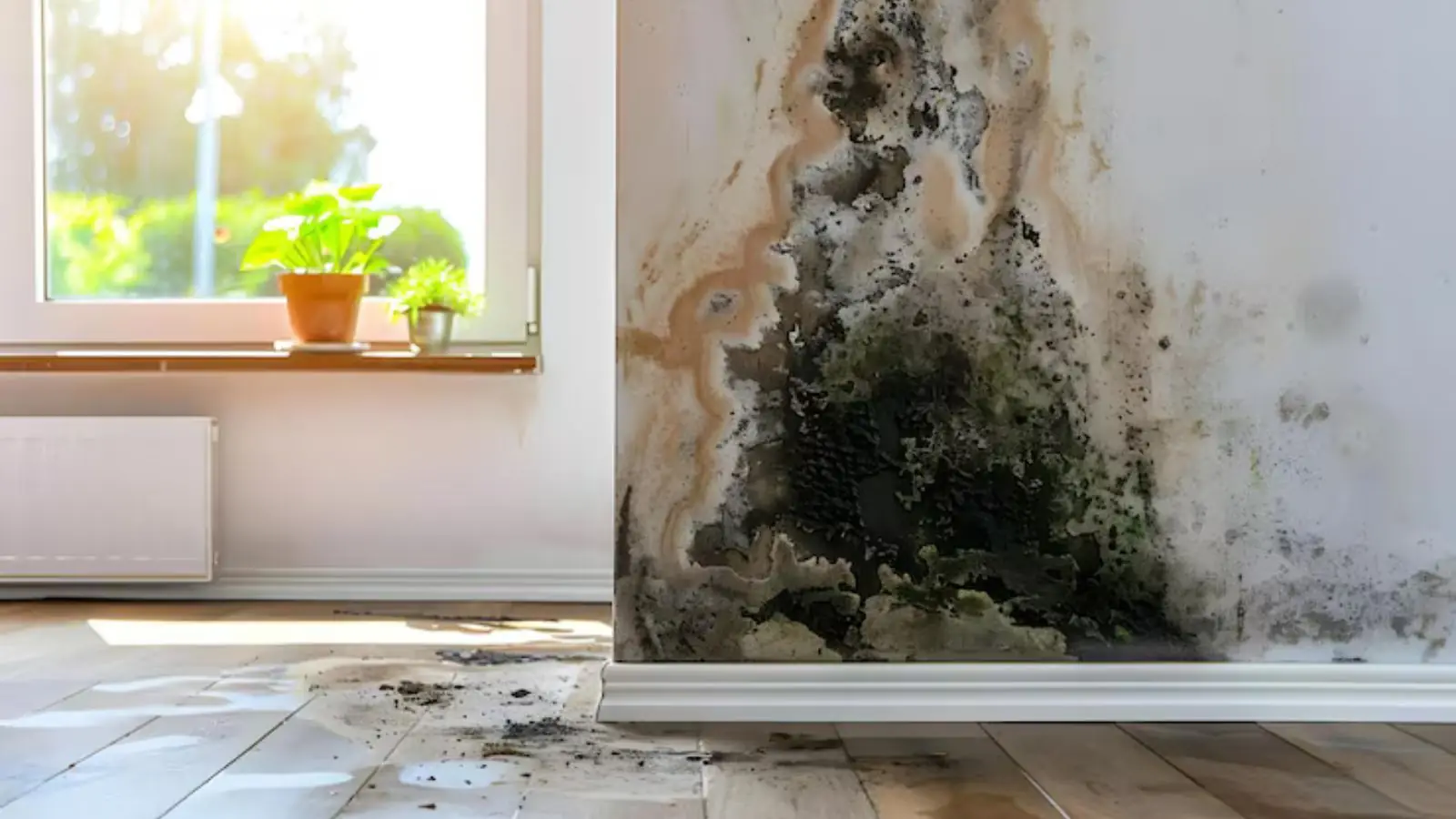
Mold after water damage is the growth that follows when building materials stay wet long enough for spores already in the air to settle and feed. The Texas Department of Insurance notes that mold can start growing within a day after a leak, which is why Southlake, TX, homeowners hear so much about the first 24 to 48 hours.
This timeline walks through what changes as water sits, what you can do right away, and where a water mitigation crew fits in. It is a general guide, not an assessment of any particular house.
Hour zero: the water arrives
A burst pipe, a failed washer hose or a roof leak soaks drywall, insulation, flooring and framing within minutes. Water wicks upward in drywall and spreads sideways under flooring, often far past the stain you see.
The most useful thing to do now is stop the source. Shut off the main water valve, lift valuables, and keep people and pets out of any water that may be contaminated. If the panel is wet or you smell gas, leave and call the utility or 911 before anyone else.
The first day: drying decides what happens next
In the first day, the goal is removing standing water and starting air movement. Extraction units pull water from carpet and floors, and air movers push dry air across wet surfaces.
Mold needs moisture, so the speed of drying matters more than anything sprayed on a wall. Pulling up soaked carpet pad early often keeps the subfloor from staying wet underneath. Cleaning products do not replace drying. A surface that looks clean but stays wet behind the paint is still a place for growth to begin.
Hours 24 to 48: the window that matters
This is the stretch most restoration pros point to. Materials that are still wet after a day or two begin to favor growth, particularly in warm, closed-up rooms.
LGR dehumidifiers pull moisture out of the air, and moisture meters confirm whether drywall and framing are actually returning to normal. Thermal imaging cameras help find wet spots behind walls without cutting them open. Our crews rely on readings, not guesses, to decide when drying is done.
Days three to five: visible changes can start
If wet material is left in place, you may notice spots, fuzzy texture or a persistent musty smell. These are signs of moisture trouble, though color or smell alone cannot tell you what is growing.
Porous materials such as insulation, ceiling tile and carpet padding are the hardest to save once they stay wet. Removal of those items is often part of mitigation, and it is done early because it is simpler than dealing with growth later.
What drying first looks like compared with waiting
The timeline below shows how the same leak can play out depending on how quickly drying begins. It describes general patterns only, since every building and every leak differs.
| When drying starts | What the crew typically does | What often remains |
|---|---|---|
| Within the first day | Extract water, set air movers and LGR dehumidifiers, check with moisture meters | Wet materials can often dry in place |
| After a day or two | Same drying plus targeted removal of soaked porous materials | More removal and rebuild may be needed |
| After several days | Assessment of affected areas, possible involvement of licensed mold professionals | Visible growth is more likely, and the scope usually grows |
| Hidden leak found late | Trace the source with thermal imaging, open the wall as needed | Scope depends on how long it stayed wet |
What to do while you wait for help
Small steps protect your home and your insurance position.
- Take photos and video of the damage before you move anything.
- Keep damaged items until the adjuster has seen them.
- Make temporary repairs, like tarping a roof, to limit further damage.
- Remove soaked rugs and loose items so air can reach the floor.
- Run the air conditioner to help pull moisture out of the air.
- Keep receipts for anything you buy to reduce the damage.
Why drying and mold work are separate jobs
A drying crew restores the building to a dry condition. Mold work, if it turns out to be needed, is regulated in Texas and follows a written protocol. If a house stays wet long enough that growth appears, a licensed removal team enters the picture, with containment and clearance steps of its own.
Cleanup after a spill, such as the soaked carpet and pad, falls under water damage cleanup, which is a different scope than assessing or removing growth.
We take calls from Colleyville and Roanoke as well, and the clock works the same way in every town. Wet drywall in one house behaves like wet drywall in the next, so the speed of the first response is the part you can control. Keep the call short and the details ready: where the water came from, what it touched, and when it started.
ANSI/IICRC S520 is the published standard for professional mold remediation, and ANSI/IICRC S500 covers the water damage work that comes before it. Ask any company which of the two its crews follow for each stage of your job.
When to call
Call as soon as you know water has entered the house, even if it seems small. Waiting a day to see whether things dry on their own is the choice that most often lets damage spread.
For a licensed and insured restoration professional to start drying, call Southlake Water Damage Pros at (817) 623-9267. Dispatch is 24/7, same-day response is offered when available, and the scope and price are explained before work starts.
Texas insurance and licensing facts that matter after a leak
The Texas Department of Insurance says most homeowner and renter policies cover sudden and accidental water damage, such as a burst pipe or a toilet overflow. Mold that grows on a covered damaged item is covered too. Gradual leaks and seepage are generally not covered, nor is the mold they cause, and floods need a separate flood policy.
For hidden water damage, policyholders usually need to report it within days after first seeing it, so check your policy promptly. For mold claims, the state expects a state-licensed mold professional, proof that the cause was fixed, and a certificate of removal. Hold off on permanent repairs until the insurer has inspected.
Frequently asked questions
The Texas Department of Insurance says it can begin within a day after a leak. That is why the first 24 to 48 hours get so much attention.
How much grows depends on the material, the temperature and how long it stays wet.
Fans alone often move damp air around without removing the moisture. Pros use air movers with LGR dehumidifiers and confirm results with moisture meters.
A surface can feel dry while the framing behind it is still wet.
Spraying does not dry the material, and drywall that stayed wet for days is often removed anyway. Drying and removal address the cause. Surface products do not.
If you are unsure what a stain is, a licensed mold assessor is the person who can sample and tell you.
Mold that develops on a covered damaged item is generally covered, but policies differ and many exclude testing and cleanup after the damaged item is removed. Ask your insurer exactly what yours says.
We cannot promise any claim outcome.
Not always. It depends on the water category, the size of the affected area and whether the air movers and containment make rooms unusable.
Ask the crew on site after they inspect. For city water service problems in Southlake, Public Works can be reached at (817) 748-8051.
Questions about your own situation? Call and describe what you are seeing.
☎ Call (817) 623-9267