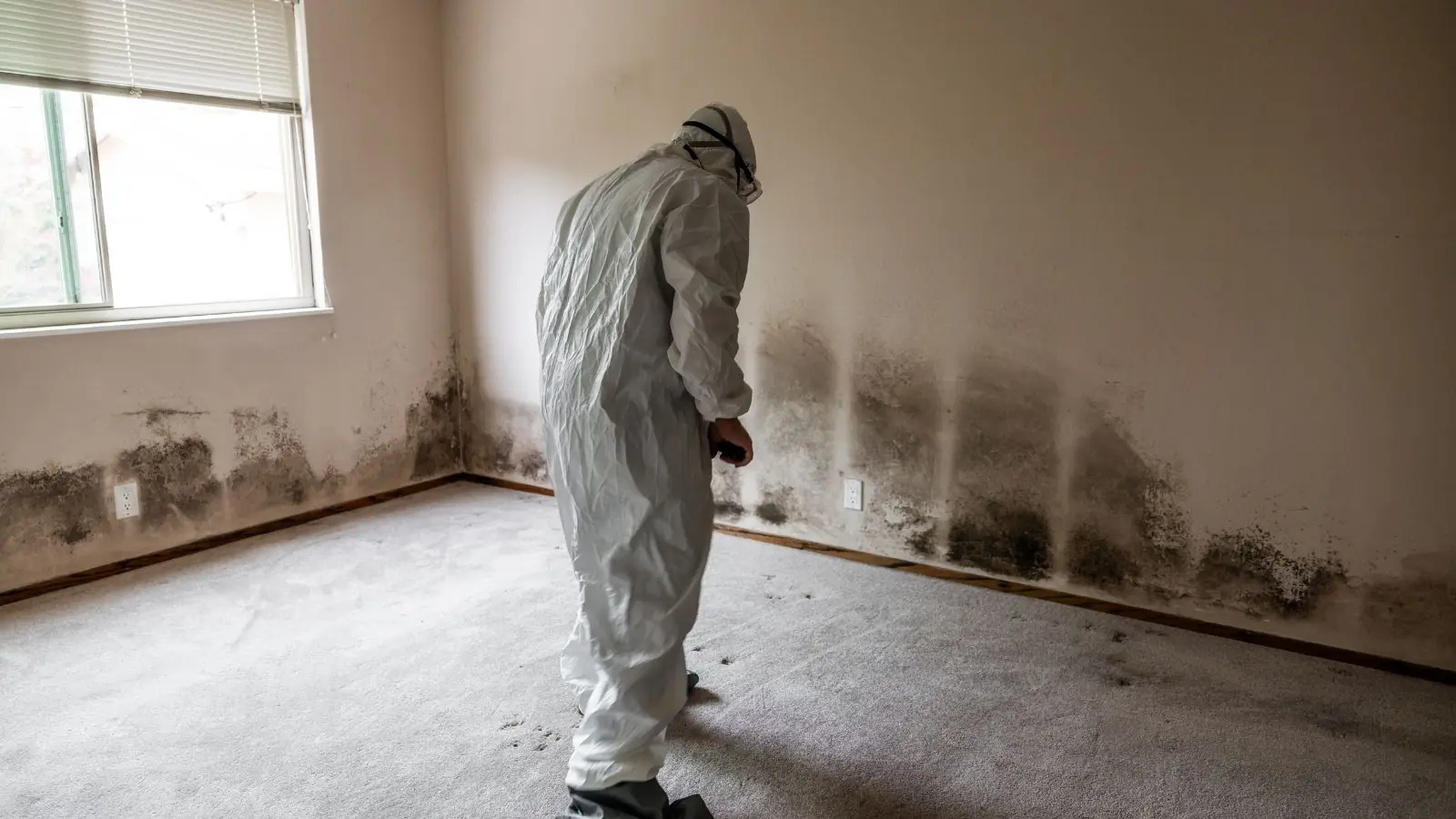
Getting rid of mold in a basement starts with finding and fixing the moisture that let it grow, then removing the affected material by the right method for the size of the job. Many homes in Southlake, TX may have no basement at all, so this guide also covers finished lower levels, crawl spaces and any damp low area where mold shows up.
Cleaning visible growth without fixing the water behind it is the most common reason mold returns to the same spot. The sections below put the steps in the order that works.
Do you even have a basement?
Many Southlake-area homes sit on slabs or raised foundations and have no true basement. If yours does not, the same principles still apply to a walkout level, a finished lower floor, a utility room, a garage storage corner or a crawl space. The question is where moisture collects.
Low areas catch water first. Rain can move toward a foundation, plumbing lines can leak into a lower wall, and a closet below a bathroom stays damp longer than a living room. Whatever you call the space, treat it as a place to check for moisture, not just a place to scrub. We handle the same kinds of lower-level problems for homes in Roanoke and Keller.
Step one: find the moisture source
Mold needs moisture, and the Texas Department of Insurance notes it can start growing within a day after a leak. A moisture meter, a thermal imaging camera and a careful look at plumbing, drains, window wells, gutters and condensation tell you where the water is coming from. Humidity from an undersized dehumidifier or a closed-off room can also be the cause.
Fix that first. A leaking supply line gets repaired, a drain gets cleared, gutters get redirected away from the foundation, and wet materials get dried. Restoration is not waterproofing, so a drying job will not stop future seepage. If a lower level takes on water often, a drainage or waterproofing contractor is a separate trade and not something we offer.
Small patch or large area: how the Texas threshold works
The Texas Department of Licensing and Regulation licenses mold assessors and mold remediators. A key threshold in its rules is 25 contiguous square feet of visible mold. Roughly speaking, an area under that size is treated differently from a larger one, and owners may do some work on their own property under exemptions.
The exact rules depend on details, such as who owns the property and who does the work. Ask TDLR or the contractor which rules apply to your job. Do not assume your situation fits the exemption because the patch looks small.
| Situation | Typical path | Who is involved |
|---|---|---|
| A small spot on a hard surface from a fixed leak | Fix the source, clean and dry, then monitor | Homeowner, with care and protective gear |
| Growth on porous material such as drywall or carpet | Remove the material and dry the area | Homeowner or a restoration professional |
| Visible mold approaching or beyond 25 contiguous square feet | Licensed assessor and licensed remediator | TDLR-licensed professionals |
| Smell with no visible source | Moisture investigation first | Restoration professional, then licensed assessor if testing is wanted |
| Buyer's lender wants mold removed before funding | Licensed remediation and documentation | Licensed remediator and certificate of removal |
Testing: who is allowed to do it
Under Texas rules, collecting air or surface samples to determine whether mold is present requires a licensed mold assessor, and the samples go to a licensed lab. Store-bought test kits are not a substitute for that process. A remediation protocol comes from a licensed consultant, and a consultant who did not write the protocol cannot declare clearance.
That separation exists so that the person who tests is not the person who gets paid to clean. If a seller, lender or insurer asks for independent clearance, ask the assessor to be someone outside the cleanup company.
What professional remediation looks like
Licensed remediation follows minimum work practices and the protocol from a licensed consultant. The area is sealed off with containment barriers and held under negative air pressure, HEPA air scrubbers filter the air, and affected porous materials are cut out, bagged and removed. Surfaces that can be cleaned are HEPA vacuumed and wiped, and the area is dried.
The published ANSI/IICRC S520 standard describes these practices, so ask any company whether its crews work to it. For jobs that involve both water and growth, our mold remediation service covers the cleanup side, and the drying side runs through water mitigation so the area stays dry afterward.
Things to avoid in a damp lower level
- Do not paint or seal over growth, because the surface will fail and the problem stays underneath.
- Do not run a dry fan across heavy growth, which can spread it into other rooms.
- Do not ignore the moisture source because the stain looks cleaned.
- Do not tear out large areas of material before photographing it for your insurer.
- Do not assume a sprayed product has solved the problem without dry readings.
None of this is a promise about results. Growth can return if moisture returns, which is why the source repair comes first.
Insurance and mold in a lower level
The Texas Department of Insurance says mold that develops on a covered damaged item is covered, but most policies do not cover gradual leaks or seepage, including the mold they cause. Most do not include mold cleanup and testing after a damaged item is removed, though some insurers let you add it.
For mold claims, use a state-licensed mold professional. The insurer will want proof the mold was removed and the cause fixed, and the professional must give a certificate of removal. Flood damage requires a separate flood policy, so ask your insurer about your own coverage.
When to call about basement or lower-level mold
Reach out when growth is spreading, a damp smell has no obvious source, or a wet spot has not dried after a day or two. Our dispatch network of licensed and insured restoration professionals serves Southlake and nearby towns, explains scope and price before work starts, and offers same-day response when available. Call (817) 623-9267.
Southlake drainage and flood map checks for low areas
Southlake's city website says the city sweeps streets and that its Streets and Drainage Team responds to storm damage, but city crews cannot use public resources to clean private property. Homeowners and HOAs maintain their own property, which includes gutters, grading and drains around a lower level.
The city's interactive map shows the 100-year and 500-year flood zones under its Environmental tab. Check the city's flood zone map and the FEMA Flood Map Service Center for your address, because flood damage needs its own policy and can affect how a lower level is repaired. Our flood damage restoration team works on that kind of loss.
Frequently asked questions
Find and stop the water. Without that, any cleaning is temporary. Dry the area and photograph the damage before you disturb it.
A small spot on a hard surface can often be handled by the owner once the leak is fixed. Larger areas, porous materials and anything near 25 contiguous square feet fall under licensing rules, so ask TDLR or the contractor which rules apply to your job.
Not always. Sampling to determine whether mold is present requires a licensed mold assessor, and samples go to a licensed lab. A test is most useful when a lender, buyer or insurer wants documentation.
Some homes may have a lower level, but many in the area may not have a basement. If yours does not, check crawl spaces, closets below bathrooms, garage corners and any other low or damp space. Our water mitigation work in a crawl space follows the same moisture-first steps.
It depends on whether moisture returns. Fixing the source and keeping the area dry is what prevents recurrence, and nobody can promise a specific result.
Questions about your own situation? Call and describe what you are seeing.
☎ Call (817) 623-9267