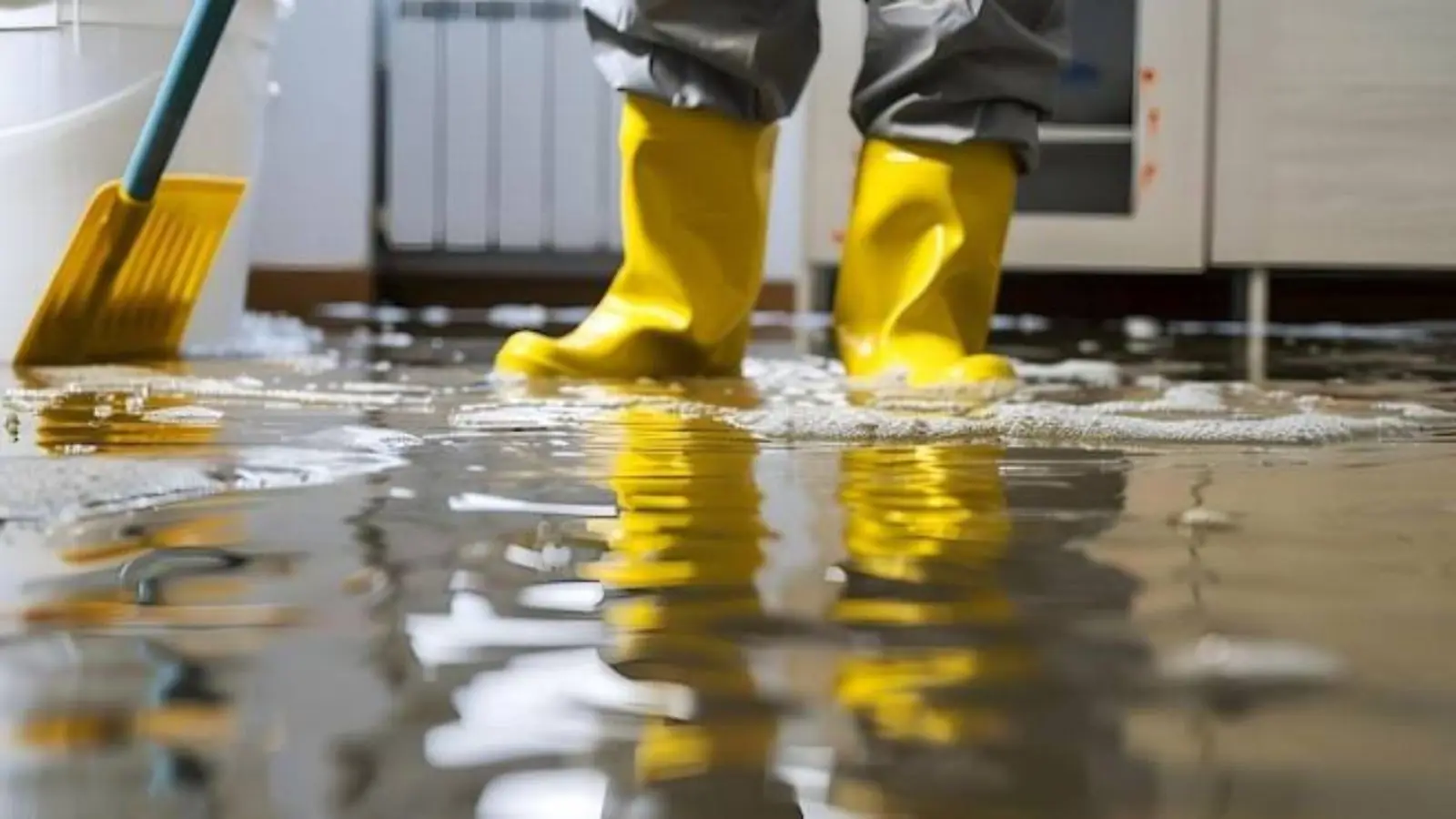
Flood water cleanup is the process of removing outside water that has entered a building, then sanitizing, drying, and clearing out whatever cannot be saved. In Southlake, TX it can start with a storm, a clogged drain, or a creek that rises faster than anyone expected.
Floodwater carries soil and contamination, so the rules differ from a clean supply line leak. This guide covers what to do first, how crews sort materials, why insurance treats flooding separately, and how to avoid common mistakes.
Safety before cleanup: what to do while you wait
Stay out of standing floodwater if you can. It may hide sharp debris and may be energized if outlets, cords, or appliances are submerged. If the water is near the electrical panel or you smell gas, leave and call the utility or 911 before you call us.
If it is safe, shut off the main water valve, lift valuables to higher shelves, and keep children and pets away from the water. Shut off power to wet areas only if you can reach the panel dry. Photograph the water line on walls before anything changes.
Why floodwater is treated as contaminated
Restoration standards sort water into categories. Category 1 comes from a clean source such as a supply line. Category 2 carries some contamination, like a washing machine overflow. Category 3 is grossly contaminated and includes sewage and water that has traveled across the ground.
Floodwater from outside is generally handled as Category 3, because of what it has picked up on the way in. ANSI/IICRC S500 is the published industry standard for water damage restoration, and you can ask any company whether its crews work to it.
| Water category | Typical source | Usual handling of porous materials |
|---|---|---|
| Category 1 | Broken supply line, rainwater from a clean roof leak | Often dried in place |
| Category 2 | Dishwasher or washer overflow | Dried or removed depending on contact time |
| Category 3 | Floodwater, sewage backup, ground water | Typically removed and discarded |
How a cleanup crew works through a flooded house
The first job is pulling out the water. Extraction units remove standing water, and wet carpet and pad are cut out and hauled away. Drywall that wicked contaminated water is usually cut above the water line so the wall cavity can be reached.
Next comes cleaning and sanitizing hard surfaces, then structural drying. Air movers and LGR dehumidifiers run until moisture meters show materials back at normal levels. HEPA air scrubbers and containment barriers are used when dust or debris would spread to clean areas.
For the cleaning and haul-out stage, see water damage cleanup, and for the broader scope of work, read about flood damage restoration.
What to keep and what to throw out
Hard, nonporous items such as glass, metal, and some plastics can often be cleaned and sanitized. Porous items like mattresses, upholstered furniture, carpet pad, and particleboard cabinets that soaked in floodwater are usually discarded.
Before you discard anything, photograph it and write down what it was. TDI advises keeping damaged items until the adjuster has seen them, so ask your insurer before the curb pile grows. Set aside valuables, papers, and photos in a clean, dry place for separate treatment.
- Usually salvageable: solid wood furniture, glass, ceramics, metal tools.
- Usually discarded: carpet and pad, mattresses, soft furnishings, wet insulation.
- Needs a decision: electronics, framed art, books, and family documents.
Flood insurance and what a home policy covers
This is the part that surprises people most. Home policies do not cover floods, according to the Texas Department of Insurance, so flood damage needs a separate flood policy. A pipe burst inside the house is another matter and is often covered as sudden and accidental.
If you have flood coverage, report the loss quickly, photograph the water line, keep receipts, and make temporary repairs to limit more damage. Hold permanent repairs until the insurer inspects. Never assume a payout or approval. If you are unsure which kind of policy you hold, call your agent and ask.
Drying, mold watch, and rebuild
Mold can begin growing within a day after water arrives, per TDI, so speed matters even when cleanup feels overwhelming. Drying should begin as soon as the water is out and the structure is safe.
If mold shows up anyway, use a state-licensed mold professional. Texas licenses mold assessors and remediators through the Texas Department of Licensing and Regulation, and the insurer will want proof the mold was removed and the cause fixed. Our mold remediation page explains the process.
Rebuild comes last: new drywall, insulation, flooring, and paint once readings confirm the structure is dry. Restoration is not waterproofing, so a repaired house can flood again in another storm.
When to call us after a flood
Call (817) 623-9267 any hour if water is in the house, a crew is needed for extraction, or you want a written scope before work begins. We are licensed and insured restoration professionals serving Southlake and nearby towns, with same-day response when available, and we explain the scope and price before work starts.
Flood maps and Grapevine Lake context for Southlake homeowners
The city of Southlake publishes an interactive map with the 100-year and 500-year flood zones under its Environmental tab. Check the city's flood zone map and the FEMA Flood Map Service Center for your address before you decide on flood coverage, since the answer decides whether a storm loss has a policy behind it.
Grapevine Lake, a federal reservoir run by the US Army Corps of Engineers, spans Denton and Tarrant counties. It was authorized for flood control and navigation, with construction from January 1948 to June 1952. In June 2015 flooding closed lake parks and boat ramps, and Tarrant County received a disaster declaration on June 3, 2015. Reporting at the time said homes were largely spared, so treat it as a regional reminder rather than a Southlake event.
Drainage on private land is the owner's job. The city's Streets and Drainage Team responds to storm damage on public property, but city crews cannot use public resources to clean private property.
Frequently asked questions
Small, clean-water spills can be handled by a homeowner. Floodwater is another story, because contamination, electrical hazards, and wall cavities make DIY risky. A crew has extraction units, moisture meters, and protective gear. We do not rent equipment, so the choice is your own cleanup or a professional crew.
Home policies do not cover floods, so flood damage needs a separate flood policy. Sudden internal water damage like a burst pipe is different. Ask your insurer exactly what your policy covers before a storm arrives.
Extraction and removal often happen in the first day or two, and structural drying commonly runs several days after that. Moisture readings decide when drying ends, not the calendar. Rebuild comes after the structure is confirmed dry.
Yes, and that is why it is treated as Category 3. Wear protective gear if you must enter, and let a crew handle porous materials. Our team serves homes in Roanoke and Colleyville too, and the same safety steps apply there.
Use the city's interactive map under the Environmental tab and the FEMA Flood Map Service Center. Both show flood zones by address. For permits tied to floodplain development, ask the city.
Questions about your own situation? Call and describe what you are seeing.
☎ Call (817) 623-9267